Duration: 10 months
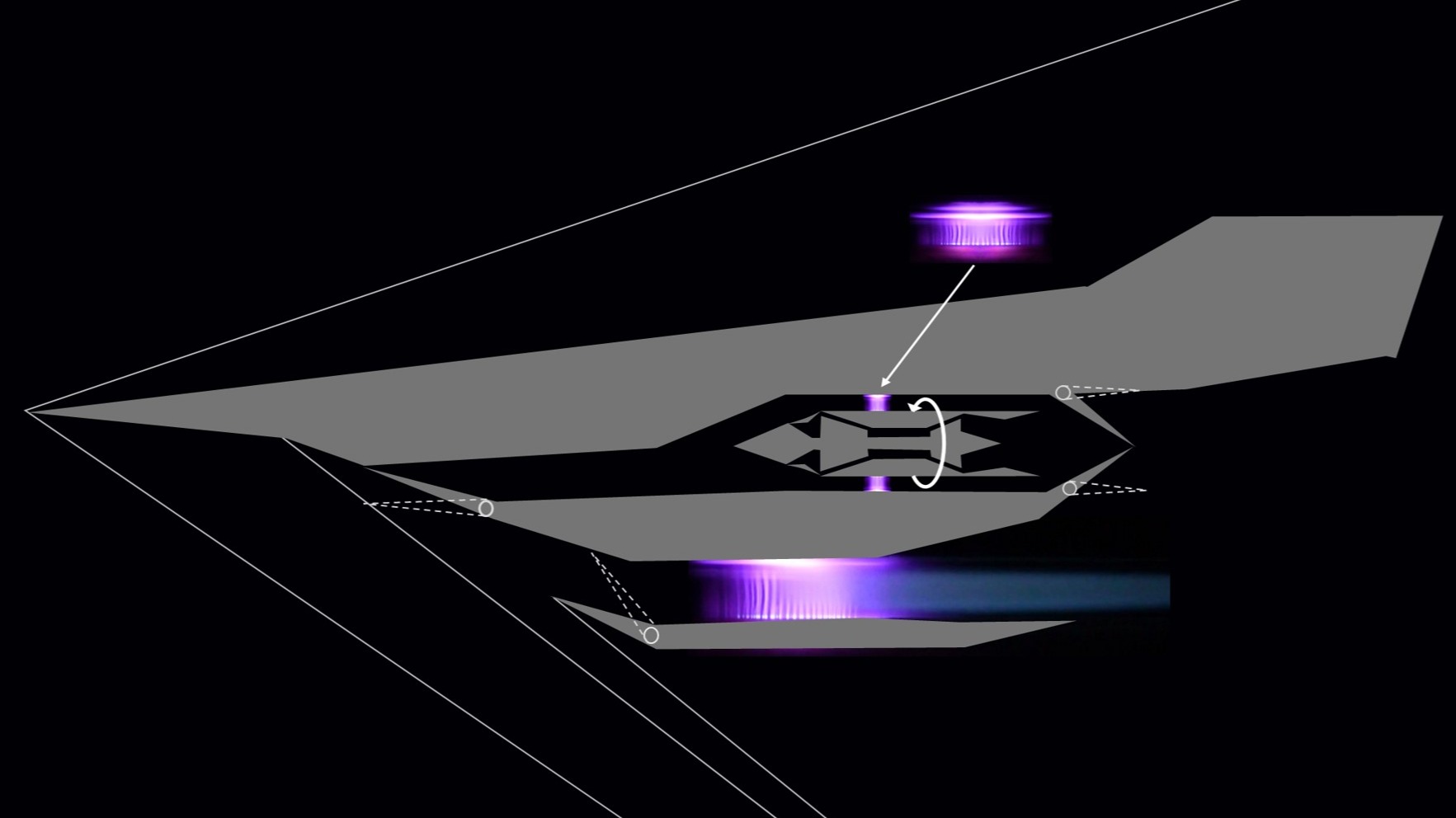
Air-breathing engines are sustainable and economical alternatives to conventional rocket engines for space launch systems. However, a single air-breathing engine type cannot cover the full operating range, leading to the exploration of combined cycle concepts. The latest concept combines turbojets (Mach 0-2), Rotating Detonation Engines (RDEs) (Mach 2-5), and scramjets (Mach 5-15). While turbojets are well-developed, RDEs and scramjets face challenges due to limited time for fuel-air mixing and burning, making ignition and flame stabilization difficult. Our plasma-assisted ignition stabilized combustion (PAISC) technology addresses these issues. This project aims to develop plasma modules to demonstrate PAISC for RDEs and Scramjets. Conventional methods for detonation initiation require a large energy or a long deflagration-to-detonation transition (DDT) length. We previously developed a pulsed dielectric barrier discharge (DBD) plasma-based ignition source that can ignite fuel-air mixtures in a microsecond timescale, releasing stronger shock waves. We will develop a strategy to amplify shockwaves using controlled DBD ignitors, achieving DDT efficiently within 0.5 m. We propose applying the same strategy inside the cavity of RDEs to stabilize detonation. Another advantage of the pulsed DBD ignitor is that it can achieve pulse-to-pulse coupling and continuously ignite high-speed fuel-air flows, ensuring stable combustion. Unlike conventional methods that focus on stabilizing diffusion flames in scramjets, our technology aims to stabilize premixed flames without perturbing the high-speed flows, reducing combustor length, and minimizing pressure losses. We will design a Mach 2 flow rig to develop our DBD source for supersonic combustion, laying the foundation for future PAISC-stabilized supersonic combustors with low drag. Overall, the developed plasma modules will address critical challenges, enabling combined cycle air-breathing engines for space launch vehicles.