Duration: 36 months
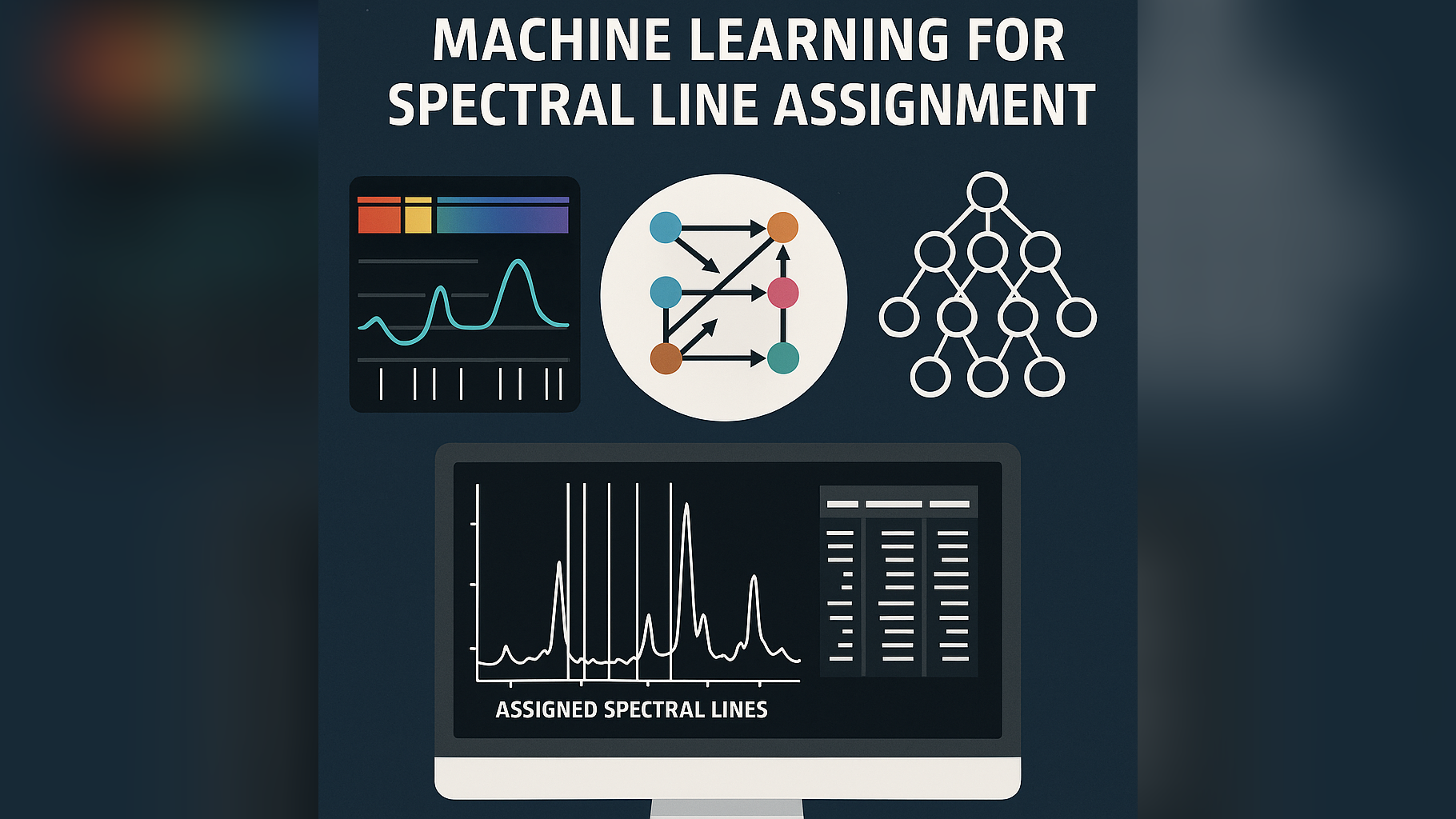
The ExoMol project [1] provides laboratory data on the spectroscopic properties of molecules for studies of exoplanets and other hot astronomical atmospheres. Spectroscopic studies contain a wealth of information on the species being studied and the environment in which they are being observed. To extract this information it is necessary to have fully assigned spectra, where an assignment is defined as a transition uniquely linked with initial and final states of the molecule. Assigning complex spectra can be a long and tedious process. Remarkably, there are still many examples of astronomical spectra where many lines remain unassigned eg [2,3,4]. This project aims to develop machine learning (ML) algorithms to perform the automated assignment of spectra. Such a tool would be transformative, potentially removing months of work of assignment per molecule. Moreover, there is the potential to unlock entire new analysis, where incomplete assignment has so far prevented us from the decrypting the molecular processes hidden in the spectral data. Building upon the evolutionary algorithm approach pioneered by Meerts et al. [5], this project will adapt and extend such techniques to assign complex spectra where effective Hamiltonian models are no longer sufficient. This work would be of great value to ESA, both in the direct application to spectroscopy-based Science and Earth Observation missions, as well as through the development of cutting-edge machine learning techniques.